Although the winter holiday season should be a time of enjoyment, the events associated with the season are often the cause of stress.
When we’re feeling stressed we’re much more likely to neglect our needs, but that is when we need to take care of ourselves the most! Making sure that we eat healthy foods, get plenty of rest, exercise, and take time out for relaxing activities helps bolster us and renews our physical and emotional resources.
During the holidays it is tempting to eat too much (and the wrong kinds of foods), drink too much alcohol, skip the exercise, and stay up too late. Although a little indulgence is okay, forgetting to take care of ourselves day after day leaves us physically and emotionally drained, and unable to handle the stressors that will come our way.
If you are up late one night because of a party or gift-wrapping session, make sure that you go to bed early the next night. Try to increase your physical activity by going walking after meals, and taking stairs rather than elevators. Even walking in the mall can be a great source of exercise! If you enjoy trying all of the different goodies at a party, make sure to just try a little bit of each. Then focus on the healthier foods, such as vegetables, fruits, whole grains and lean meats.
You may also want to ask yourself if you are truly hungry, or simply eating because the food is there. Finally, try to take some time out for yourself, even if it’s only a few minutes while you’re lying in bed in the morning. Hot baths or showers are relaxing, reading can be a great escape, and some people find meditation helpful. Everyone is different, so you will need to figure out what sort of activity provides a good way for you to take a break and decompress.
Wednesday, December 22, 2010
Tuesday, December 21, 2010
Dinner Table Conversation Starters
Holiday family gatherings are a great opportunity to take time to share, talk and eat together. Of course, the holidays aren't the only occasion to enjoy lively conversation, so keep the family meal time a tradition in your household. Make it a goal to eat together as a family at least four times a week. Here are ideas for conversation starters. Pick a topic, enjoy quality time together and take the time to learn from and appreciate each other.
Name one thing that you would like to do this weekend.
If your picture were in the paper today, what would the caption say?
If you could be any type of animal, what would it be and why?
What is your favorite family tradition?
What family tradition would you like for us to start?
Talk about two things that your friends’ families do differently from ours.
Name one thing you appreciate about the person sitting on your right.
What outside activity could we do together as a family today?
What is the most interesting news you heard this week?
If you could be president, what is the first thing you would do?
What would you like to do after you finish high school?
What was the nicest thing you did for someone this week?
Tell us about your favorite food without using the name.
If you could have a super-power, what would it be?
If our family could have any animal in the world as a pet, what would you like to have? Why?
If we had a time machine, when and where would you like to visit?
If you could participate in any event in the Olympics, which event would it be? Why?
Tell us about your favorite part of the day.
If you could invite someone to dinner who would it be? Why?
If we had no electricity, what would our day be like?
If we were to write a family goal for this week, what would it be? What could we accomplish?
How could we as a family help others in our community?
Tell us a funny joke or story.
Name one thing that you would like to do this weekend.
If your picture were in the paper today, what would the caption say?
If you could be any type of animal, what would it be and why?
What is your favorite family tradition?
What family tradition would you like for us to start?
Talk about two things that your friends’ families do differently from ours.
Name one thing you appreciate about the person sitting on your right.
What outside activity could we do together as a family today?
What is the most interesting news you heard this week?
If you could be president, what is the first thing you would do?
What would you like to do after you finish high school?
What was the nicest thing you did for someone this week?
Tell us about your favorite food without using the name.
If you could have a super-power, what would it be?
If our family could have any animal in the world as a pet, what would you like to have? Why?
If we had a time machine, when and where would you like to visit?
If you could participate in any event in the Olympics, which event would it be? Why?
Tell us about your favorite part of the day.
If you could invite someone to dinner who would it be? Why?
If we had no electricity, what would our day be like?
If we were to write a family goal for this week, what would it be? What could we accomplish?
How could we as a family help others in our community?
Tell us a funny joke or story.
Monday, December 20, 2010
Holiday Safety at Grandma and Grandpa's House
If Grandma and Grandpa do not usually have young children in the home, it is likely that their home isn't childproofed. In addition to not having safety locks on cabinets, gates on stairs, or covers on electrical outlets, they may also have prescription medications that aren't in a child resistant container.
Things to be especially watchful for, and which you may want to be mindful of when visiting during the holidays, include:
• If there is a pool, does it have a fence? Can the child get to the area where the pool is located?
• Are there guns in the house? Are they stored unloaded or locked in a box with bullets locked separately?
• Are medications, poisons and household cleaners out of reach? What needs to be removed, locked up or put out of reach?
• If they have a pet, do you need to take special precautions to keep children safe?
• Are there gates on the stairs? Do you need to bring a portable gate?
• How can you remove small objects, such as nuts or candy dishes so young children cannot reach them?
• Can you remove breakable objects or put them out of reach of the children?
• Are there holiday decorations, such as lights, trees, plants, artificial snow or candles that could be potentially harmful to children? What can you do to make the environment safer for your child?
• Remember that holidays can be stressful for some children. Traveling, visiting family, a disruption of the regular routine, excessive noise and getting presents can increase your child’s stress levels. Try to maintain your child’s usually routines such as sleep and nap schedules and meal times. Remember to spend plenty of one-on-one time with your children so you both can enjoy the holidays. Take along indoor and outdoor games, activities and their favorite snacks for them.
Things to be especially watchful for, and which you may want to be mindful of when visiting during the holidays, include:
• If there is a pool, does it have a fence? Can the child get to the area where the pool is located?
• Are there guns in the house? Are they stored unloaded or locked in a box with bullets locked separately?
• Are medications, poisons and household cleaners out of reach? What needs to be removed, locked up or put out of reach?
• If they have a pet, do you need to take special precautions to keep children safe?
• Are there gates on the stairs? Do you need to bring a portable gate?
• How can you remove small objects, such as nuts or candy dishes so young children cannot reach them?
• Can you remove breakable objects or put them out of reach of the children?
• Are there holiday decorations, such as lights, trees, plants, artificial snow or candles that could be potentially harmful to children? What can you do to make the environment safer for your child?
• Remember that holidays can be stressful for some children. Traveling, visiting family, a disruption of the regular routine, excessive noise and getting presents can increase your child’s stress levels. Try to maintain your child’s usually routines such as sleep and nap schedules and meal times. Remember to spend plenty of one-on-one time with your children so you both can enjoy the holidays. Take along indoor and outdoor games, activities and their favorite snacks for them.
Thursday, December 16, 2010
Parents Give Teens Alcohol
The discussion about the drinking age comes up with some frequency in my classes for parents with adolescents and teens. It can be a challenge that many parents face. Yet, one recent study found that parents are in fact the source of alcohol for many teens today.
Using surveys of sixth, seventh and eighth graders from a middle school in urban Chicago, researchers from the University of Minnesota and the University of Florida studied alcohol use and sources of alcohol among these young teens. It’s common to hear about kids with fake ID’s who have been able to purchase alcohol and get into clubs, or older siblings and neighbors who provide alcohol to younger children. However, according to this study, social sources including family and friends were the most likely source of alcohol for these underage drinkers. In addition, parents were the primary source of alcohol to the middle school students in this study.
By the time they were in 8th grade, these students had increased their access to other sources, and were “taking alcohol from home, and getting alcohol from other adults, individuals under 21, and commercial sources”.
The researchers concluded that their findings reinforce the importance of educating parents about the impacts of providing alcohol to their children and their children’s friends. They recommended that parents who consume alcohol should be vigilant about locking up or monitoring alcohol in their homes. They also suggest that parents who provide their children with alcohol for special occasions or religious events should consider the subsequent effects, including increased risk behaviors associated with early acceptance of alcohol.
So if you’re considering supplying (or already supply) alcohol to your underage teens and their friends, you might want to consider the consequences.
Using surveys of sixth, seventh and eighth graders from a middle school in urban Chicago, researchers from the University of Minnesota and the University of Florida studied alcohol use and sources of alcohol among these young teens. It’s common to hear about kids with fake ID’s who have been able to purchase alcohol and get into clubs, or older siblings and neighbors who provide alcohol to younger children. However, according to this study, social sources including family and friends were the most likely source of alcohol for these underage drinkers. In addition, parents were the primary source of alcohol to the middle school students in this study.
By the time they were in 8th grade, these students had increased their access to other sources, and were “taking alcohol from home, and getting alcohol from other adults, individuals under 21, and commercial sources”.
The researchers concluded that their findings reinforce the importance of educating parents about the impacts of providing alcohol to their children and their children’s friends. They recommended that parents who consume alcohol should be vigilant about locking up or monitoring alcohol in their homes. They also suggest that parents who provide their children with alcohol for special occasions or religious events should consider the subsequent effects, including increased risk behaviors associated with early acceptance of alcohol.
So if you’re considering supplying (or already supply) alcohol to your underage teens and their friends, you might want to consider the consequences.
Tuesday, December 14, 2010
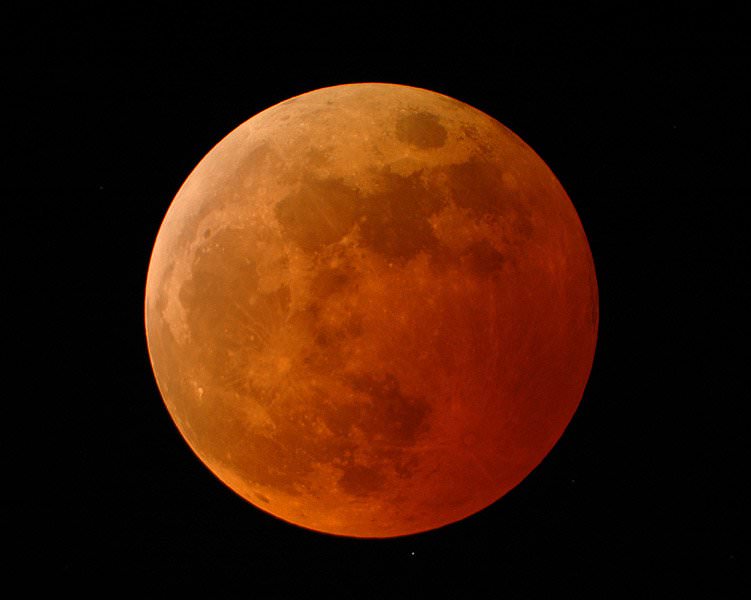
Total Lunar Eclipse of December 20, 2010
This eclipse will be visible from the western hemisphere, meaning that anyone on the entire night side of Earth will have a view of the full Moon and will see the phases of the eclipse. In this particular eclipse, the Moon passes through the darkest part of the Earth's shadow (umbra) meaning that the entire surface of the Moon will no longer have direct sunlight shining on it, but because of the atmosphere of the Earth, refracted rays of sunlight will in fact bend around the Earth and illuminate the Moon, creating a trademark orange or reddish color on the Moon, an eerie effect indeed. The excellent NASA Eclipse Website has much more detailed information on the eclipse.
The event starts at 10:33 pm in San Francisco, as the partial phases of the eclipse take about an hour. The period of "totality" when the entire surface of the Moon is dark, lasts about an hour from 11:41 pm until 12:53 am, and then the Moon is slowly revealed again for another hour. Cross your fingers for good weather, dress warmly, and enjoy this fascinating spectacle of nature. And if you have binoculars or a telescope, use them - this is exactly the time to get a close-up look at one of the wonders of the sky.
Image courtesy of the Universe Today.
Year-round Education
Year-round schooling is a hot topic among school districts across the United States, although it’s not a new idea. The first year-round school in the US opened in Indiana in 1904. What is not considered the traditional school-year calendar was designed to allow children to help their parents on the farm.
In recent decades, overcrowding, high drop-out rates and low standardized test scores have brought about a return of year-round school calendars, increasing from 410 public schools in 1985 to 3,095 in 2000.
Advantages includes: improved achievement test scores, reduced drop-out rates and more high school graduates going on to college, fewer discipline problems, improved teacher and student attendance, reduction in teacher stress, and reduction in class size. Another advantage is that minority youth tend to take advantage of educational opportunities provided through school activities occurring over breaks.
Disadvantages include findings that multi-tracks do not divide students and teachers equally in terms of ability. Also, year-round school calendars result in increased administrator and clerical burn-out, scheduling conflicts, siblings placed on different attendance schedules, less teacher enhancement opportunities and increased costs of operation.
As the debate continues, proponents honestly state that year-round schools are hard work to institute and that calendars don’t teach kids. Teachers do!
In recent decades, overcrowding, high drop-out rates and low standardized test scores have brought about a return of year-round school calendars, increasing from 410 public schools in 1985 to 3,095 in 2000.
Advantages includes: improved achievement test scores, reduced drop-out rates and more high school graduates going on to college, fewer discipline problems, improved teacher and student attendance, reduction in teacher stress, and reduction in class size. Another advantage is that minority youth tend to take advantage of educational opportunities provided through school activities occurring over breaks.
Disadvantages include findings that multi-tracks do not divide students and teachers equally in terms of ability. Also, year-round school calendars result in increased administrator and clerical burn-out, scheduling conflicts, siblings placed on different attendance schedules, less teacher enhancement opportunities and increased costs of operation.
As the debate continues, proponents honestly state that year-round schools are hard work to institute and that calendars don’t teach kids. Teachers do!
Monday, December 13, 2010
Imperfect Holidays
I wish I would have started a tradition thirty years ago. I would call this tradition “Holiday Bloopers” or “Things That Went Wrong.” This tradition wouldn’t be to remind me of my failures and short-comings, but it would serve to give us all something to laugh at years later.
Some of the best times I share with my extended family include laughing at mishaps, funny situations or down-right embarrassing moments when things didn’t quite go as planned. Perhaps we have a twisted sense of humor, but I believe hearty laughter is essential to families.
I would take photographs of each blooper. One would be of the huge pile of delicious, buttery mashed potatoes splattered on the kitchen floor when my wrist gave out and they just kept sliding out of the bowl and plopping to the floor while I (and everyone else) watched.
Another photo would be the beautiful bottoms of a dozen crispy, blackened, burned rolls – and don’t pretend you haven’t done this. And when a gift gets the wrong recipient’s name on it, such as when Uncle Henry got the lacey, pink Victoria’s Secrets unmentionables.
I don’t know why, but I just think it would be funny to see photographs of these things.
With this tradition, we would delight in any “things gone wrong” moment instead of expecting everything to be perfect and getting disappointed when it’s not. In fact, we might even search out the “photograph of the season” to add to the pile. People aren’t perfect. Families aren’t perfect. Holidays don’t have to be perfect. They just have to bring us together.
I’m hoping my children and their families will gather (in the far, far future) to laugh about some of the stupid, clumsy or embarrassing things I have done.
Some of the best times I share with my extended family include laughing at mishaps, funny situations or down-right embarrassing moments when things didn’t quite go as planned. Perhaps we have a twisted sense of humor, but I believe hearty laughter is essential to families.
I would take photographs of each blooper. One would be of the huge pile of delicious, buttery mashed potatoes splattered on the kitchen floor when my wrist gave out and they just kept sliding out of the bowl and plopping to the floor while I (and everyone else) watched.
Another photo would be the beautiful bottoms of a dozen crispy, blackened, burned rolls – and don’t pretend you haven’t done this. And when a gift gets the wrong recipient’s name on it, such as when Uncle Henry got the lacey, pink Victoria’s Secrets unmentionables.
I don’t know why, but I just think it would be funny to see photographs of these things.
With this tradition, we would delight in any “things gone wrong” moment instead of expecting everything to be perfect and getting disappointed when it’s not. In fact, we might even search out the “photograph of the season” to add to the pile. People aren’t perfect. Families aren’t perfect. Holidays don’t have to be perfect. They just have to bring us together.
I’m hoping my children and their families will gather (in the far, far future) to laugh about some of the stupid, clumsy or embarrassing things I have done.
Subscribe to:
Posts (Atom)