Showing posts with label Total Lunar Eclipse. Show all posts

Tuesday, December 13, 2011

Geminid Meteor Shower 2011

The Geminids peak the nights of December 13th and 14th this year, one of the better meteor showers of the year. Unfortunately for 2011, most of the Geminids will be nearly invisible due to the very bright Moon that dominates the late night and early morning sky, when the Geminids are at their best.

The effect of a bright Moon on a meteor shower was vividly illustrated to me during the Total Lunar Eclipse a few days ago. I was at Ocean Beach on the west coast of San Francisco for the eclipse in the early morning hours. Facing west, Gemini was directly in front of us, dominating the western sky. As the brightness of the Moon faded, we began to notice meteors -- we were seeing some very early Geminid meteors, facing the radiant directly. I was very surprised at the stark contrast in meteor visibility from Full Moon before the eclipse started, to an ever-increasing amount of meteors over a very short period of time as the Moon, in effect, when through all of its phases in about 60 minutes. It reaffirms for me the huge difference a moonlit night makes when watching a meteor shower.

Although the meteors will be diminished for the Geminid Meteor Shower in 2011, I'll still take a look, since a big shower like this has plenty of bright meteors that pierce the night despite moonlight. If you want to read more about the Geminids, check out this interesting article about the Geminids radiant, from Earth Sky, from the LA Times, or this one from NASA Science News.

Image courtesy EarthSky.

Tuesday, December 6, 2011

Total Lunar Eclipse 2011 - in San Francisco

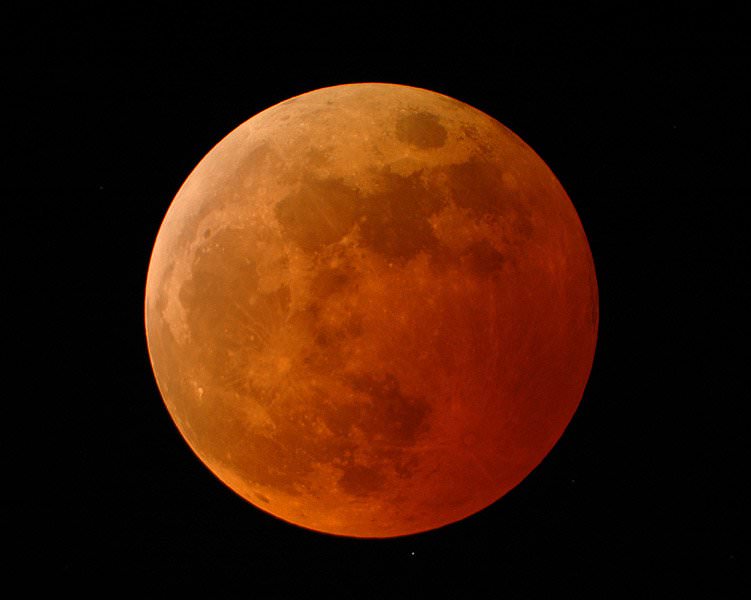
Saturday morning, we will witness a Total Lunar Eclipse visible from western North America and regions across the Pacific Ocean. In San Francisco, we will have a dramatic early morning spectacle of the fully eclipsed Moon setting on the Pacific just as dawn breaks. As with any total lunar eclipse, the Moon's surface will be completely covered by the dark 'umbral' shadow of the Earth, but it will remain visible, taking on an eerie appearance of rusty red, or deep grey, or a mix of colors. Every eclipse is a little bit different, so we wait in anticipation to see what happens Saturday morning.

The circumstances of this eclipse are outlined in detail in this informative Sky & Telescope article, and this excellent NASA Science News article.

The timeline for San Francisco (and the entire pacific time zone) are: start of eclipse at 4:45 am, start of totality at 6:05 am, and end of totality at 6:57 am. The glow of the dawn sky will emerge in the eastern sky shortly after 6:00 am, so the Moon will be in total eclipse as the sky begins to brighten, and by the time the Moon exits the total phase, the sky will be fully lit in advance of the sunrise at 7:13 am.

What does all this mean to the casual viewer? You will experience the best views and the most drama from 4:45 am until 6:30 am, when the Moon gradually changes from full to completely eclipsed, and the skies are dark enough to appreciate the beauty and subtlety of the lighting and color of the lunar surface. And as the Moon's brightness is attenuated as the Earth's shadow creeps across the surface, the backdrop of stars will begin to shine more brightly by contrast, revealing the wonderful winter sky at its best, with the constellations Taurus, Orion and Auriga around the Moon, and some of the most beautiful, bright stars in the entire night sky punctuating the skyscape.

I welcome the public to stop by Ocean Beach on the west coast of San Francisco for an early-morning star party, where I and others from the San Francisco Amateur Astronomers (SFAA) will have telescopes set up for public viewing. We will set up at the beachwalk just across from the Beach Chalet restaurant on Great Highway, starting around 4:30 am. But heed the advice of Deborah Byrd in this EarthSky article, and wear very warm clothes. You'll be glad you did, as the winter chill is quite intense just before sunrise.

Wednesday, August 31, 2011

Big Astronomy Events in 2011 and 2012

Much of the time, I enjoy astronomy as a day-to-day hobby, taking in the sky often and enjoying the slowly changing view of the heavens. Sometimes, however, big events come along and obligate the observer to be present at a specific moment in time -- and also have the good luck of clear skies. We have a three such events in the coming year, and the San Francisco Bay Area is a good base from which to see these events.


This Lunar Eclipse will peak on Saturday morning, December 10th, just before sunrise here in San Francisco, meaning that if the skies are clear, the best view will be at the coast, where the Full Moon will be entering Total Eclipse just as it is setting over the Pacific. This will be impressive!


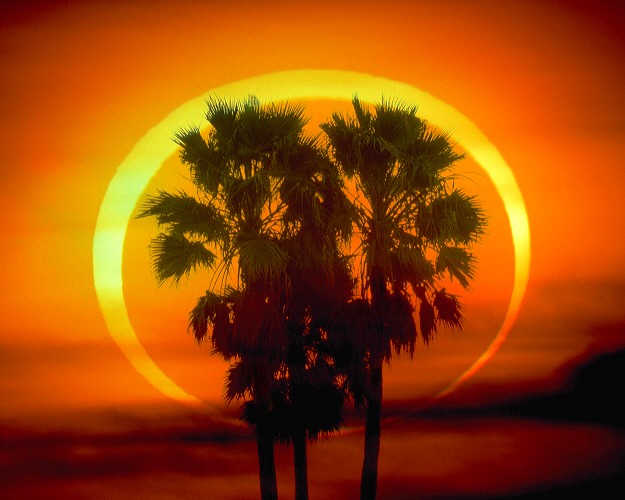
An Annular Eclipse, also called a "Ring of Fire" eclipse, happens when the Moon's disk fits "inside" the disk of the Sun, creating a ring of sunlight in the sky. It's not the same as a Total Solar Eclipse, but still a beautiful natural phenomena, one worth a trip to Northern California to see. The viewing path can be seen on the map in this link, and will pass near Redding and Mt. Shasta in Northern California. I'll be organizing a road trip with the San Francisco Amateur Astronomers (SFAA) to see this spectacle.


A transit of a planet in front of the Sun is a rare and unusual event. This is one of a pair of transits of Venus, the first of which occurred in 2004, paired with this one in 2012. Then we have a 100-year gap until the next pair of transits of Venus. It will be a daytime event, of course, because we are going to see the tiny disk of Venus cross directly over the Sun's disk.


- - - - - - - - - - - -


I'll write about each of these events as the time draws nearer, so for now the main thing is to mark your calendar and do a bit of background reading by following the links in this blog post.


Image courtesy of NASA.

Sunday, June 12, 2011

The Very Long-lasting Total Lunar Eclipse of 2011

On Wednesday June 15th, viewers in the eastern hemisphere will be treated to a very long-lasting Total Lunar Eclipse, a 100-minute marathon of an eclipse that will reveal the center of the Milky Way in the backdrop as the bright Moon is enveloped in the darkest part of Earth's shadow. Unfortunately for those of us on the other side of the Earth, including here in San Francisco, we will miss the entire eclipse. (But we will get a nice lunar eclipse later this year, on December 10th.)

As for June 15th, this particular Total Lunar Eclipse will be longer than most for two reasons, (a) the Moon passes nearly through the center of the Earth's shadow, and (b) the Moon is nearly at Apogee, when it is farthest from the Earth (and hence appears a bit smaller than usual and takes longer to pass through the Earth's shadow). For my colleagues in Germany, the Moon will rise already in mid-Eclipse, which is an outstanding sight that I have seen one time in the past. Moonrise will be at approximately 9:30 pm, and the Moon remains in total eclipse until approximately 11:00 pm. That would be something to enjoy from a spot with a good eastern horizon. For other locations around the world, use this chart from the NASA Eclipse Web Site to determine the timing for your location. I wish my friends on the other side of the world clear skies and happy viewing!

Wednesday, June 1, 2011

Eclipse Season: Three Solar and Lunar Eclipses all in a row

For most people it is a surprise to learn that Solar and Lunar eclipses are quite frequent events. Every six months we have an "Eclipse Season" in which we have two or sometimes three eclipses over the course of a few weeks, depending on the exact geometry of the Sun-Earth-Moon trio. June is one of these months, starting with a Partial Solar Eclipse (today), then a Total Lunar Eclipse mid-month, and finishing with a Partial Solar Eclipse (actually in July, but just hours after the end of June!).

Eclipses are indeed common for Planet Earth, but for a given fixed location on the planet, eclipses are less common. For example, the first eclipse (Solar) of June is visible only from the very far north regions of the planet. The Total Lunar Eclipse mid-June will be visible primarily in the eastern hemisphere, so for those of us in San Francisco, it will take place during the day when we cannot see the Moon. And the final (Solar) eclipse of this eclipse season will be visible only in a small region of the globe deep in the southern hemisphere.

Eclipses come in "seasons" because they can only happen when the Moon is precisely positioned to cast its shadow on the Earth, or when the Moon passes precisely through the Earth's shadow. As the Moon's orbit is not exactly aligned with the Earth's orbit, the two orbits (and shadows) come into alignment for a few weeks every six months. The rest of the time, the shadows of the Moon and Earth miss each other and we are eclipse-free!

Since eclipses are such dramatic events, when they are visible in your area, you should go out of your way to see them. For us in California, the next good eclipse will be a Total Lunar Eclipse on December 10th. More on that when the date draws nearer.

Meanwhile, if you want to know more about upcoming eclipses, visit the excellent on-line resource from NASA. The NASA Eclipse Web Site is filled with detailed information about solar and lunar eclipses, including maps, charts, and exact timing for each event. Another excellent resource is the EarthView Eclipse Network. The image (above) is courtesy of the EarthView Eclipse Network.

Sunday, December 26, 2010

Shimmering Early Morning Sky

As we approach the latest sunrise of the year (January 4th at 7:25 am in San Francisco), the morning sky remains dark enough to see stars until well after 6:00 am. That means that the early riser is rewarded with some lovely sights to close out 2010 and welcome 2011. Brilliant Venus dominates the sky each morning, shining bright in the South-East well before dawn. This week the waning Moon presents a changing landscape as it moves past Saturn, the bright star Spica (see diagram on the right), and then later in the week Venus and Mercury. Following the Solstice-Total-Lunar-Eclipse, the Moon is tracking downward on the Ecliptic, meaning that each Morning it is following the planets from high in the sky on a steep angle toward the horizon.

If you are not an early riser, don't despair. I'll have a post about the Winter skies soon. All you have to do is look up (especially if you are up at midnight on New Year's Eve and have clear skies). The Winter is a fantastic time to enjoy the stars.

Image courtesy of Sky and Telescope Magazine.

Tuesday, December 14, 2010

Total Lunar Eclipse of December 20, 2010

Monday night December 20th, we get to witness a very exciting astronomical spectacle, a Total Lunar Eclipse. This one promises to be a special one, capping the longest night of the year with the strange and beautiful view of the full Moon being blotted out by the shadow of the Earth. The geometry of an eclipse is fairly textbook, but the experience is quite dramatic.

This eclipse will be visible from the western hemisphere, meaning that anyone on the entire night side of Earth will have a view of the full Moon and will see the phases of the eclipse. In this particular eclipse, the Moon passes through the darkest part of the Earth's shadow (umbra) meaning that the entire surface of the Moon will no longer have direct sunlight shining on it, but because of the atmosphere of the Earth, refracted rays of sunlight will in fact bend around the Earth and illuminate the Moon, creating a trademark orange or reddish color on the Moon, an eerie effect indeed. The excellent NASA Eclipse Website has much more detailed information on the eclipse.

The event starts at 10:33 pm in San Francisco, as the partial phases of the eclipse take about an hour. The period of "totality" when the entire surface of the Moon is dark, lasts about an hour from 11:41 pm until 12:53 am, and then the Moon is slowly revealed again for another hour. Cross your fingers for good weather, dress warmly, and enjoy this fascinating spectacle of nature. And if you have binoculars or a telescope, use them - this is exactly the time to get a close-up look at one of the wonders of the sky.

Image courtesy of the Universe Today.

Friday, December 3, 2010

KFOG Podcast - December 3, 2010

Today on the KFOG Morning Show Podcast with Irish Greg, we talked about the discovery of new stars in the galaxy, alien life forms right here on Earth, the upcoming Geminids Meteor Shower on December 13-14, the upcoming Total Lunar Eclipse on December 20-21, and Holiday Shopping including a special 10% discount on anything at Scope City in San Francisco (my favorite place to shop) if you mention KFOG or The Urban Astronomer. Click here to listen. And take advantage of the 10% offer while it lasts!

Wednesday, February 3, 2010

Annular Solar Eclipse of 2010

Eclipses are very exciting events, special moments that provide beautiful visual spectacles in the sky. Every year there are typically two to three eclipses of the Sun ("solar eclipses") and two to three eclipses of the Moon ("lunar eclipses"). And for each eclipse the event can be "total" (where the Sun or Moon is fully blocked out), or "partial" where a portion of the Sun or Moon is blocked out, but a portion is still visible.

Last month there was one such event, a type of solar eclipse called an Annular Eclipse. In this configuration, the Moon's disk appears to block out most the Sun but does not completely block it out. What makes the Annular Eclipse very special, however, is that the disk of the Moon is fully encircled by the Sun. The eclipse in January was not visible here in San Francisco but was seen in the eastern hemisphere. A fellow astronomy blogger and resident of Sri Lanka, Desh, put together an eclipse page that has video footage of the event and lots of great photographs. He organized a major eclipse viewing event for Sri Lanka.

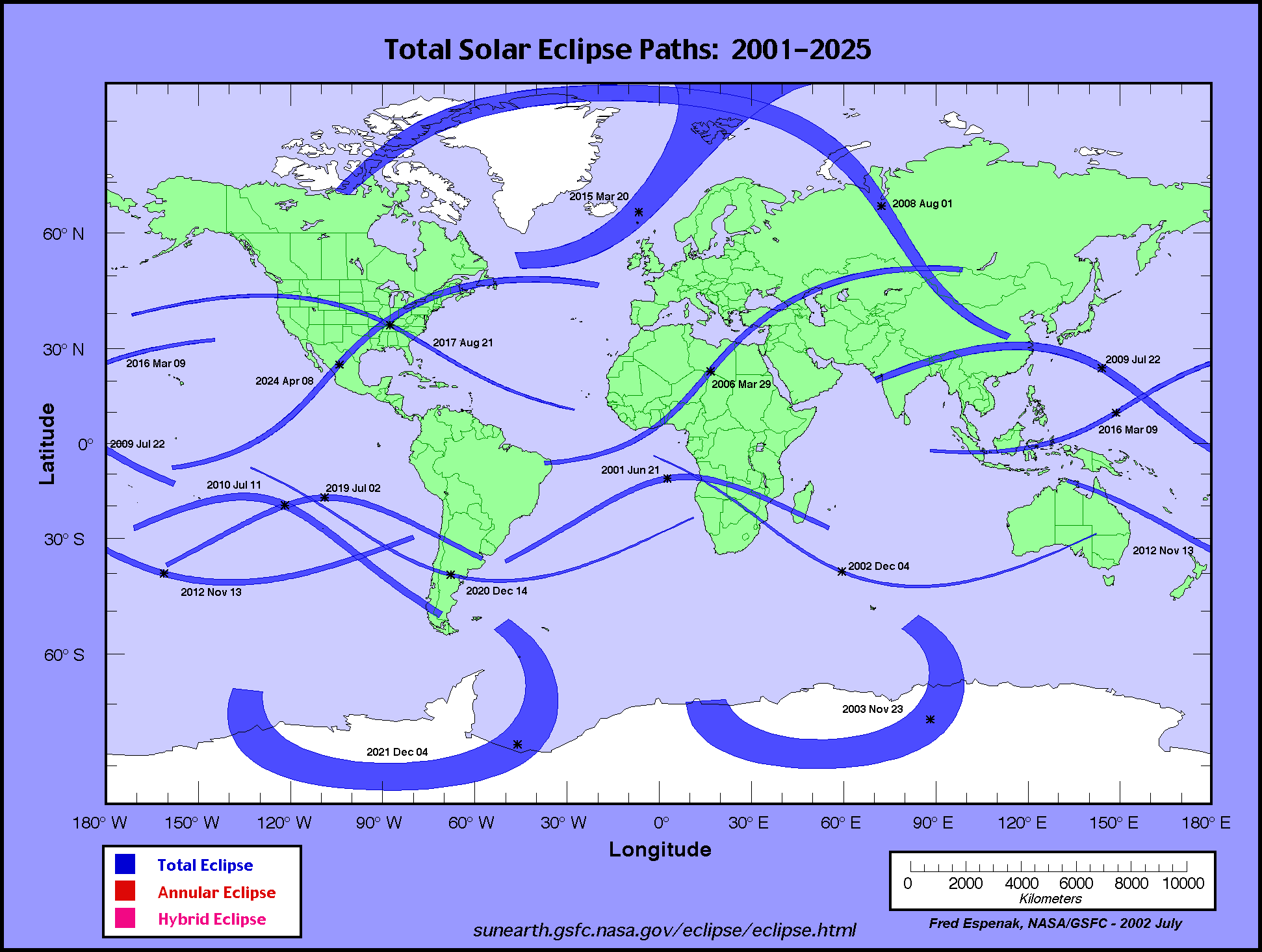
Throughout 2010 there are more eclipses. The biggest event of the year is the Total Solar Eclipse that happens this July 11th, but again will not be visible here in San Francisco. To see this one you will need to travel to the South Pacific. The NASA Eclipse web site is full of details on this and every eclipse and for those of you who want to travel to see a Total Solar Eclipse someday, consult the NASA Total Solar Eclipse Paths map on their website. I think of it as a long-range travel planner!

For those of us in the Bay Area (and the entire Western Hemisphere), mark your calendars for December 21st when we get a beautiful Total Lunar Eclipse on the solstice to welcome in the winter.

Note: for a nice audio description of an eclipse, listen to my recent interview on KALW (just after the stargazing part of the interview).