 Today was the final launch of the Space Shuttle. KFOG's Irish Greg and I talk about this historic event, about the wonders of the Summer night sky, and about upcoming Star Parties in the San Francisco Bay Area. All in 5 minutes! Listen here.
Showing posts with label Star Party. Show all posts
Showing posts with label Star Party. Show all posts
Friday, July 8, 2011
KFOG Podcast - July 8, 2011
Today was the final launch of the Space Shuttle. KFOG's Irish Greg and I talk about this historic event, about the wonders of the Summer night sky, and about upcoming Star Parties in the San Francisco Bay Area. All in 5 minutes! Listen here.

Friday, May 6, 2011
KFOG Podcast - May 6, 2011
In today's podcast, KFOG's Irish Greg and I talk about the big planetary conjunction, how to find deep-space objects, upcoming astronomy lectures and star parties on Mt. Tam, and the likelihood of astronomical chaos on May 21st :-) Listen here!
Monday, May 2, 2011
The Last Vestiges of the Winter Sky
 The young Moon graces the last vestiges of the winter sky this week, creating a beautiful pattern in the west for several evenings in a row. The big, bold constellations of winter including Orion, Taurus and Canis Major, and the very distinctive asterism the Winter Triangle are sinking lower each evening into the glow of the sunset sky, and on May 4th, 5th and 6th the Moon enters the picture to create a spectacular evening picture.
 I have been doing Star Parties and outdoor presentations on astronomy the last few weeks, and the change from week to week has been dramatic. There is a natural change to the sky each evening, as the constellations and bright stars along the celestial equator and zodiac (ecliptic) move approximately 1 degree westward toward the sunset. At the same time, the length of each day is growing, meaning that these great winter constellations are disappearing rapidly into the glare of sunset. But there is nothing to worry about -- they will make their way around the sky to rejoin the view in the early morning, and continue the great ritual of the sky changing slowly from one season to the next.
Thursday, March 31, 2011
Get Involved: Globe At Night, Lectures, California Academy of Sciences
 There is always something to do if you are interested in getting a bit more involved in astronomy. Right now, you can learn at a lecture, attend a star party, or take part in a global project to record light pollution while learning about new constellations. Read on for details.
 Here in San Francisco, the California Academy of Sciences hosts a lecture series on astronomy topics. The Dean Lecture Series features talks on some of the most riveting subjects in astronomy, and Monday April 4th is the next talk, presented by Joel Primack and Nancy Ellen Abrams, focuses on the most modern research in cosmology, that of Dark Matter and Dark Energy.
The California Academy of Sciences also has a fun event every Thursday night with its "NightLife" series, transforming the museum into a fun party. Each week has a theme, and next Thursday April 7th is Yuri's Night, an annual celebration of the first man in space. If the skies are clear, you can find me on the Living Roof giving star tours alongside the docents of the museum showing off planets, nebulae and the Moon through telescopes.
If you don't live in San Francisco, visit the Night Sky Network website to find lectures and astronomy clubs in your area.
The Globe At Night project is now in the second phase, inviting Citizen Scientists around the world to support the effort to raise awareness of light pollution, learn about the night sky in your neighborhood, and pay attention to details of the constellation Leo the Lion. Take part - it only requires a few minutes and is an eye-opening experience.
Tuesday, September 14, 2010
Blue Star, Red Star, Yellow Star
 When conducting a star party, I always point out star colors. Most of the time, people see the stars as uniformly white, but in fact upon closer inspection it's easy to see that stars have color, sometimes very dramatic color. This time of year there are several colorful bright stars that illustrate nicely the range of what you can see in the sky.
The southern sky is dominated by the distinctive shape of Scorpius, the Scorpion of the Zodiac constellations. The "heart" of this constellation is the bright red supergiant star Antares. It is in the middle of the body of the scorpion and it is one of the biggest stars we can see, so big that if places in the Solar System it would enclose Mercury, Venus, Earth and Mars. To the observer, it looks a reddish-orange color.
High above this time of year is the Summer Triangle, featuring three of the brightest stars in the sky. One of these three is Deneb in the constellation Cygnus, the "Northern Cross." Deneb appears blue to the observer and in fact is indeed a blue-white supergiant star, similar to Antares in terms of massive size, brightness and distance from the Sun.
These two beautiful stars should be enough to whet your appetite for detail when you look at the night sky. They are bright enough and easy to spot and display color quite nicely. But don't stop there. A simple pair of binoculars gets you enough resolution to see an amazing array of color in so many of the stars in the sky.
The colors of the stars is an indication of their temperature. Like the different levels of heat in flame, the colors of stars follows a similar pattern with red being cooler and blue being hotter. There are yellow stars, hotter than the red giants, and next in line are white stars, cooler than the blue stars. Details of Stellar Classification and Color Index are documented on very fine websites for those who want to learn more about star colors.
Friday, July 16, 2010
KFOG Podcast - July 16, 2010
 I was in San Francisco this morning recording another podcast for the KFOG Morning Show Podcast Series. Morning Show Producer Irish Greg and I had a very spirited and lively conversation about planets, the Solar System, Star Parties, Iridium Flares, Dark Energy and Dark Matter. In a fast-paced 9-minute conversation we discuss everything from the phase of the Moon to the origin of the Universe. Get inspired to see the sky tonight: Click here to listen.
Friday, March 12, 2010
Get Involved: Chart the Skies, Hear a Lecture, Attend a Star Party
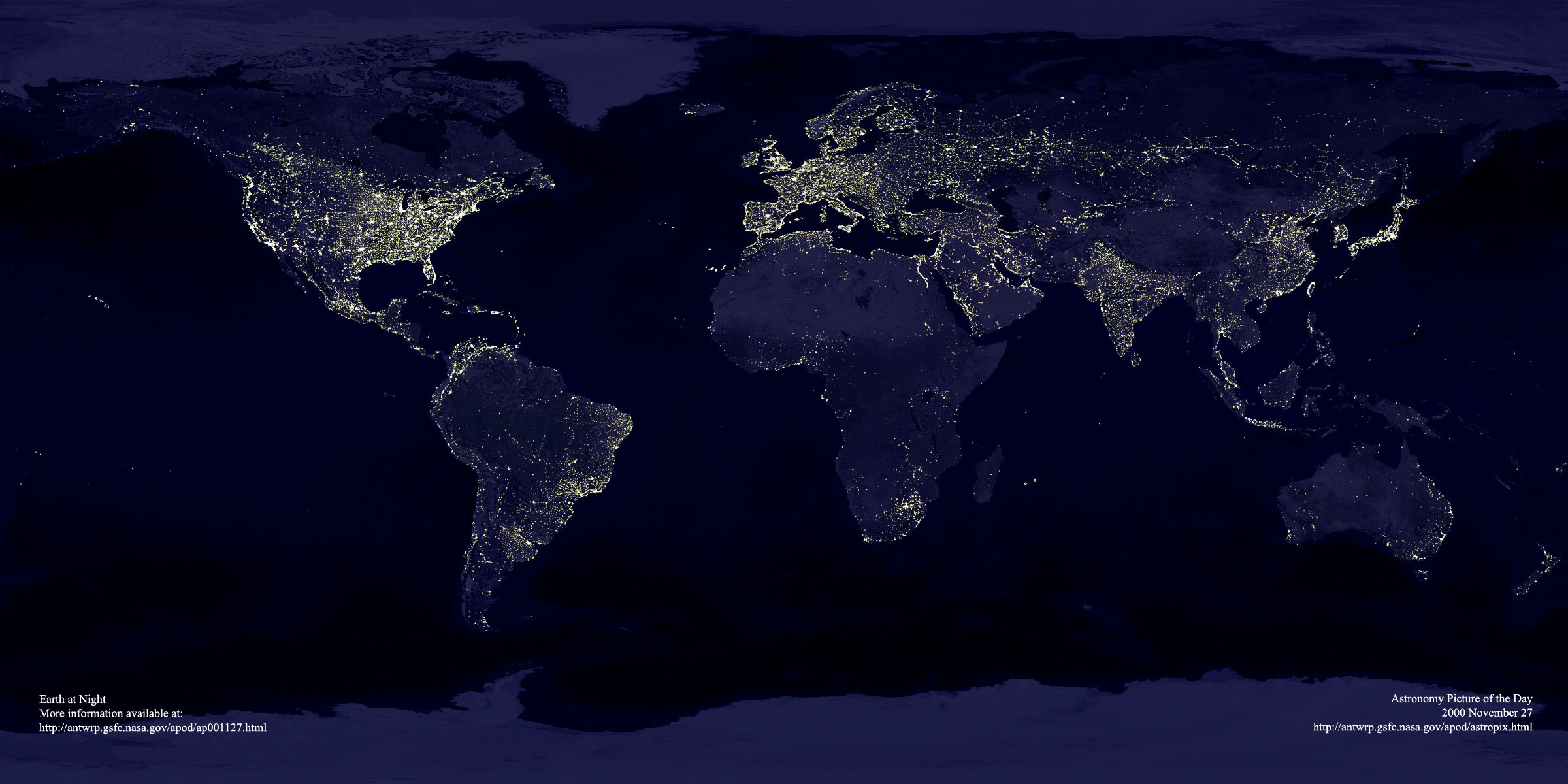 There are many ways to take your interest in astronomy up a notch. Here are a few things that are sure to enhance your interest and knowledge of the skies.
Globe at Night: I am a big fan of this annual project, one that combines astronomy with awareness of light pollution and is also a global participation project. Go outside tonight and look up at Orion, then report what you see at the Globe at Night website. It only will take a few minutes but it will change how you see the sky at night. I am certain about this one.
Lecture: Each month the San Francisco Amateur Astronomers hold their meeting at the Randall Museum in San Francisco. The meetings are open to the public and fe
 ature a speaker on a topic of interest in astronomy. This month the meeting takes place on March 17th and features Andrew Pohorille from NASA Ames Research Center for a presentation on "The Origins of Life in the Universe."
California Academy of Sciences Nightlife: Every Thursday the Cal Academy stays open late for a fun, festive evening with music, drinks and science. When the skies are clear you can stargaze and look up clos
 e at the universe through telescopes on the Living Roof. And this week, on Thursday March 18, I'll again be a guest at NightLife giving a talk about the Night Sky and laser-guided star tours on the roof. I hope to see you there. (note: must be at least 21 years of age)
Star Parties: The San Francisco Amateur Astronomers host monthly star parties at Lands End in San Francisco, weather permitting. The next on is on Sunday March 21st. And on April 17th the Mount Tamalpais lecture series and star parties return. These are an excellent combination with lectures at the Mountain Theater and star gazing in a dark setting atop Mt. Tam. You won't be disappointed -- even when it is foggy in San Francisco it is generally clear and dark on Mt. Tam.
Monday, February 8, 2010
Get Involved: Cal Academy, Star Parties, meet John Dobson
 February is a busy month here in San Francisco for those who are ready to take a step forward and get involved in a local astronomy event or two. Here's the lineup.
On February 11, the San Francisco Amateur Astronomers (SFAA) team up with the California Academy of Sciences for a new series of astronomy talks and star tours on the Living Roof of the Cal Academy. I'll be giving the talk this Thursday during the NightLife event at 7:15 pm. More information and tickets on the NightLife webpage.
On February 17, the SFAA holds its monthly meeting and lecture at the Randall Museum in San Francisco. And on February 20th they have their City Star Party and Telescope Workshop. You can dust off your old telescope and bring it out for a quick lesson on using your telescope (before the sun sets), and then enjoy stargazing at the City Star Party. This is at Lands End in San Francisco.
On February 25
 th and 26th, the amateur astronomy community of San Francisco bids farewell to a living legend in the field, John Dobson. John is a co-founder of the San Francisco Sidewalk Astronomers (they call what they do "urban guerilla astronomy") and the creator of the easy-to-build and easy-to-use telescopes that bear his name, Dobsonians. There will be a get together with John on Thursday 25th in the Sunset District of San Francisco, and sidewalk astronomy with John at a location to be determined in the city, to say Farewell as John moves from San Francisco to Los Angeles. I am impressed with Sidewalk Astronomers and especially with John Dobson, who had a singular vision to make telescopes accessible to anyone who wants to build one out of inexpensive parts, and to get these telescopes out on the street so everyone can appreciate the wonders of the sky and see something they hadn't seen before. I respect that.
I hope to see you at one of these events.
Wednesday, December 2, 2009
Get Involved: Astronomy Lectures, Star Parties and Telescope Workshops
 There are many ways to get involved with astronomy here in San Francisco, or wherever you may be. A great resource for finding events in your neighborhood is the Night Sky Network, a resource chock-full of information from astronomy clubs across the United States. Just enter your location and you can find out what is happening in your area.
Here in San Francisco,
 the California Academy of Sciences has an astronomy lecture series called the Benjamin Dean Lecture Series. The next lecture in the series will be on Monday December 7th. The topic is Saturn, presented by Dr. Carolyn Porco, the director of the imaging team for the Cassini
  spacecraft that is orbiting Saturn. You can get tickets for the December 7th Dean Lecture online.
The San Francisco Amateur Astronomers (SFAA) have their monthly meeting at the Randall Museum on December 17th and their "City Star Party" on December 26th at Land's End in San Francisco. The City Star Party on the 26th (weather permitting) will be a great chance to bring out new holiday gifts such as telescopes and binoculars and learn to use th
 em alongside amateur astronomers. The SFAA and the San Francisco Sidewalk Astronomers have free telescope workshops before each City Star Party but please RSVP to them at clinic@sfsidewalkastronomers.org if you plan to come on December 26th.
I hope to see you at an upcoming event!
Monday, August 17, 2009
Get involved: Astronomy events in August
San Francisco Amateur Astronomers (SFAA) are hosting two events in the coming days, both open to the public at no charge.
The monthl y meeting of the SFAA takes place on Wednesday evening August 19th at 7:30 pm at the Randall Museum in San Francisco. From the SFAA: "Jack Welch of the Robert Ferguson Observatory in Sonoma gives a presentation on how we measure time and how time measurement is handled in various astronomy and space situations. Welch will explain how our understanding of time measurement has changed as technology and theory have developed, and will explore some of the special challenges satellites and spacecraft have when it comes to timekeeping."
The monthly SFAA event on Mount Tamalpais in Marin features a speaker and a public Star Party. It takes place at the Mountain Theater on Mt. Tam on Saturday August 22nd at 8:30 pm (lecture) with the star party immediately following the lecture. From the SFAA: "Dr. Anthony Coloprete of NASA-Ames will fill us in on all the details of the LCROSS mission. Two spacecrafts are on their way to the moon, and the impending impact on October 9 will be visible even with small scopes from Earth. Why crash into the moon? Dr. Coloprete’s talk 'Prospecting for Water on the Moon' reveals all."
The SFAA welcomes all to their events each month. I hope to see you at one of these events.
The monthl
 y meeting of the SFAA takes place on Wednesday evening August 19th at 7:30 pm at the Randall Museum in San Francisco. From the SFAA: "Jack Welch of the Robert Ferguson Observatory in Sonoma gives a presentation on how we measure time and how time measurement is handled in various astronomy and space situations. Welch will explain how our understanding of time measurement has changed as technology and theory have developed, and will explore some of the special challenges satellites and spacecraft have when it comes to timekeeping."
The monthly SFAA event on Mount Tamalpais in Marin features a speaker and a public Star Party. It takes place at the Mountain Theater on Mt. Tam on Saturday August 22nd at 8:30 pm (lecture) with the star party immediately following the lecture. From the SFAA: "Dr. Anthony Coloprete of NASA-Ames will fill us in on all the details of the LCROSS mission. Two spacecrafts are on their way to the moon, and the impending impact on October 9 will be visible even with small scopes from Earth. Why crash into the moon? Dr. Coloprete’s talk 'Prospecting for Water on the Moon' reveals all."
The SFAA welcomes all to their events each month. I hope to see you at one of these events.
Saturday, August 8, 2009
Get involved: AANC astronomy lectures and star party in September
 Save the date: September 12th in Millbrae (just south of San Francisco near SFO). The Astronomical Association of Northern California (AANC), along with the Astronomical Society of the Pacific (ASP), are sponsoring the AANC annual meeting and has designated Saturday September 12th as a day open to the public. The day will include lectures by expert astronomers and astrophysicists, solar viewing through telescopes during the day, brown bag workshops, exhibits by local astronomy clubs and dealers, and an evening star party. Families
  are welcome and children are admitted free. Check out the details on the AANC Annual Meeting 2009 website and register now. I'll be taking part throughout the day and I'll be supporting the evening Star Party as well. More on these topics soon.
Friday, July 24, 2009
Amateur Astronomy on KALW Radio / SFAA Star Parties
 I like blogging about astronomy because I want to get the public motivated to spend a few minutes out under the stars instead of staying inside at night. To that end, I've been able to extend my reach by being a guest on KFOG radio from time to time. This week KALW, public radio at 91.7FM in San Francisco, broadcast a feature story on the San Francisco Amateur Astronomers at one of their Star Parties on Mt Tam. It's great radio and it gives you a good perspective on what you do at at Star Party. KALW also recorded a brief interview with yours truly talking about the night sky. I used to be a radio DJ years ago and it's a real pleasure to have the opportunity to get in front of a microphone and reach out to the public over that medium, be it on KFOG or KALW.
The next chance to meet the San Francisco Amateur Astronomers at a star party on Mt Tam is this Saturday night, July 25th. The evening opens at 8:30 pm with a lecture by Dr. Natalie Batalha of San Jose State, talking about a NASA mission called Kepler. The Kepler Mission is looking for habitable planets that are orbiting other stars in the Milky Way. After the lecture, the SFAA will have telescopes for public viewing of the heavens. Unfortunately I will miss the lecture and star party on Mt Tam this month, but fortunately I'll be near Lake Tahoe enjoying dark skies and hosting some star parties there. More on that in a future post.
Subscribe to:
Posts (Atom)


