Meteors are wonderful to see, arriving unannounced and fleeting in an instant across the sky, obligating the hopeful viewer to pay attention or miss this spectacle of the heavens. On any given night if you simply are out viewing the skies, you will probably see one or two, but throughout the year there are special times when the Earth's orbit takes us through a region of space dust, creating meteor showers, in which the intensity and regularity of meteors increases dramatically.
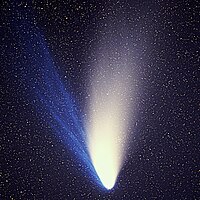
The Eta Aquarid meteor shower peaks Thursday night, the night of May 5th into the morning of May 6th. This is not the biggest meteor shower of the year, but it certainly is interesting because it is caused by small bits of debris from the trail of Halley's Comet, the famous comet that orbits the Sun and is visible from Earth every 76 years. Comets leave small trails of debris in their wake, and comets that have orbits that intersect the orbit of Earth around the Sun create our annual meteor showers. So if you see an Eta Aquarid meteor tonight, you'll know it was once part of Halley's Comet, having been stripped away by the heating of the Sun on some past fly-by of Earth.
To see this shower, as is the case for all meteor showers, you need a dark location (even a backyard shielded from streetlights in the city will do), warm blankets, a recliner chair or a patch of grass to lie on, a big view of the sky, and patience. The name of this shower is based on Aquarius (the constellation) where the meteors appear to originate from, but they are visible all over the sky. Best viewing for this shower is early morning. The dawn sky will start to brighten around 5:00 am, so you will need to start early Friday morning if you want to see these. Have fun!