Much of the time, I enjoy astronomy as a day-to-day hobby, taking in the sky often and enjoying the slowly changing view of the heavens. Sometimes, however, big events come along and obligate the observer to be present at a specific moment in time -- and also have the good luck of clear skies. We have a three such events in the coming year, and the San Francisco Bay Area is a good base from which to see these events.
This Lunar Eclipse will peak on Saturday morning, December 10th, just before sunrise here in San Francisco, meaning that if the skies are clear, the best view will be at the coast, where the Full Moon will be entering Total Eclipse just as it is setting over the Pacific. This will be impressive!
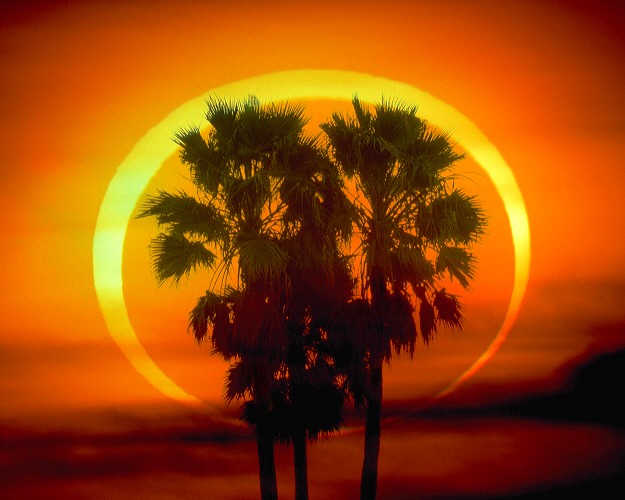
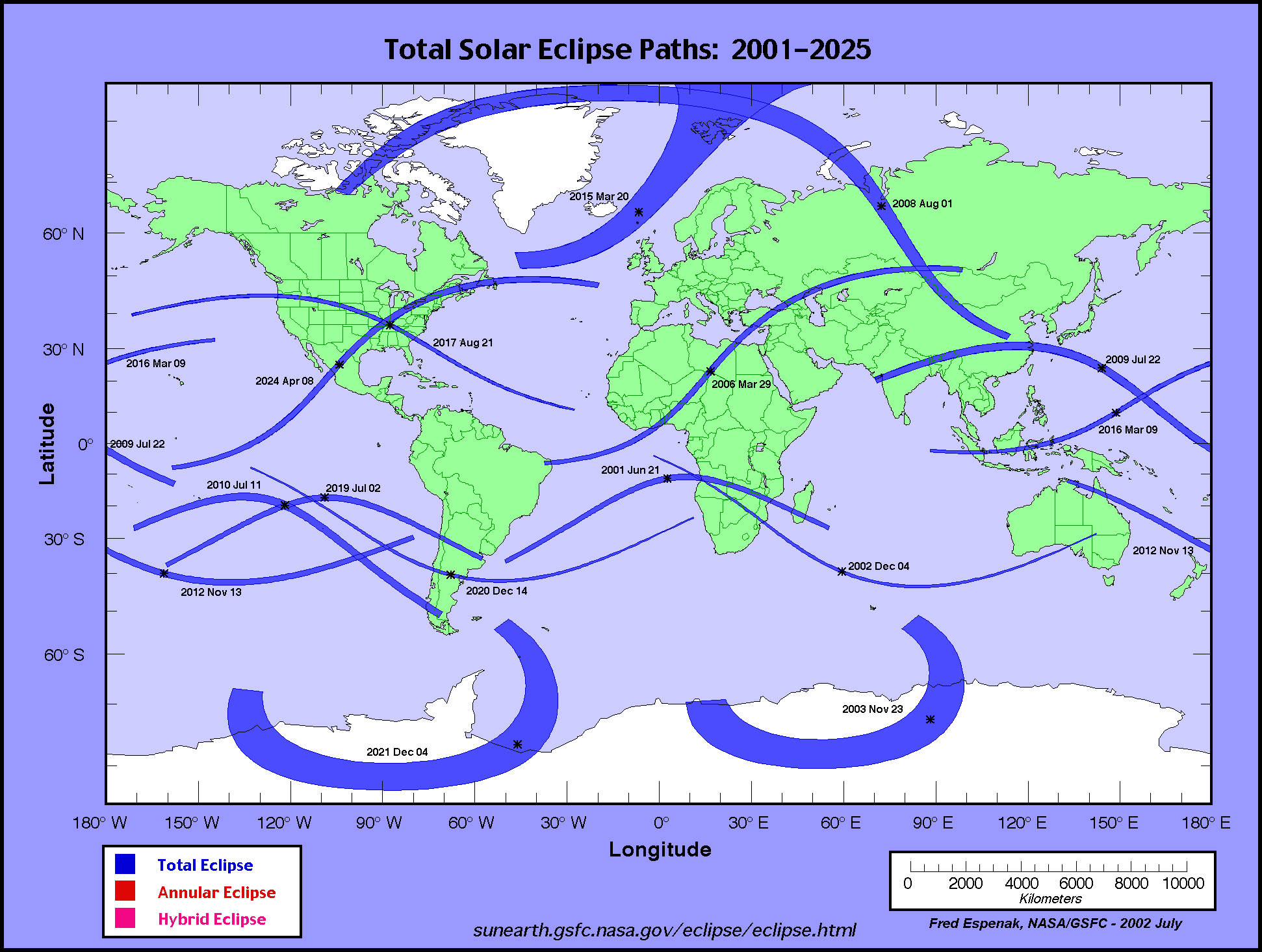
An Annular Eclipse, also called a "Ring of Fire" eclipse, happens when the Moon's disk fits "inside" the disk of the Sun, creating a ring of sunlight in the sky. It's not the same as a Total Solar Eclipse, but still a beautiful natural phenomena, one worth a trip to Northern California to see. The viewing path can be seen on the map in this link, and will pass near Redding and Mt. Shasta in Northern California. I'll be organizing a road trip with the San Francisco Amateur Astronomers (SFAA) to see this spectacle.
A transit of a planet in front of the Sun is a rare and unusual event. This is one of a pair of transits of Venus, the first of which occurred in 2004, paired with this one in 2012. Then we have a 100-year gap until the next pair of transits of Venus. It will be a daytime event, of course, because we are going to see the tiny disk of Venus cross directly over the Sun's disk.
- - - - - - - - - - - -
I'll write about each of these events as the time draws nearer, so for now the main thing is to mark your calendar and do a bit of background reading by following the links in this blog post.
Image courtesy of NASA.